Showing posts with label bubble. Show all posts

Thursday, June 26, 2008

Oil Prices: Speculative Bubble or Not?


Yes, I know, it's not exactly an original headline, but the question does still persist. I'm certainly on the side of the argument that says it is a speculative bubble, but even I have my doubts about the extent to which the latest rise is due to speculation as opposed to real demand and supply factors. No one, for example, could argue that the supply of oil is not ultimately limited and that certainly has an effect on the price of oil. There is no doubt that the price of oil has to rise as the known sources of oil slows.

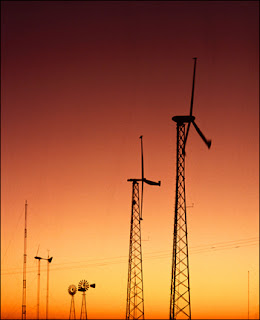
On the other side of the argument, my side, you balance the falling supply of oil with the rise in alternative fuel sources such as wind power that has received a lot of attention lately. Similarly, there's more talk about hybrids and plug-in hybrids among the automakers than ever before. As the cost of these alternatives fall, consumers will demand more of them and consequently require less oil (traditional fuel), which should drive-down the price of oil. As a result, you could argue that the force of dwindling supply is being countered by the rise in the availability of alternatives. The question then becomes, of course, which force is more powerful?

Actually, would anyone really question the suggestion that alternatives such as solar, wind and nuclear eventually outweigh the demand for oil? The cost of drilling and refining oil is only going to rise as the world's oil companies must search for less available reserves off-shore or in oil sands like those in Canada. By comparison, the improving technologies are only going to help drive-down the cost of the alternatives. The result almost certainly has to be that the demand for oil falls as the demand for the alternatives rises. The real question then becomes, of course, what is the timeline. Unfortunately, I don't have an answer for that, but I will say that I don't believe the current price of oil is sustainable and that a bet against oil will undoubtedly pay off in the long-term. I'm just not sure of my definition of 'long'.

Monday, May 26, 2008

Of course it's an Oil Price Bubble!

It's almost funny how the discussion over whether oil prices are spurred by speculation or market demand forces; of course it's a speculative bubble. Those arguing against this view are quick to point to China's growing economy and similar demands from India; there's no doubt that that is the case, but it's ridiculous to think that anything changed so drastically in either of those markets within the past year to justify the rising prices we see around the world.

Need some proof, no problem. How about the total notional value of over-the-counter commodities derivatives that have risen from $1.02 trillion in 2004 to a value of approximately $8.4 trillion by the end of 2007. Yes, there no doubt that some fundamental demand must be credited for part of this rise, but numbers are simply so staggering that suggesting a speculative bubble is not the primary culprit is simply irresponsible. So, assuming that it is a speculative bubble, why is that important? Good question!

The prices are now so high that they are actually affecting demand - rather than vice versa. Drivers are driving less; airlines are cutting flights and jobs as well as authorizing new fees for customers to cover the cost of rising fuel prices. Similarly, other commodities are rising (most notably wheat prices, which have doubled in the past few months) under pressure from increased transportation costs. All these rising costs mean one thing: a slowing economy. Given that many, including the likes of Mr. Warren Buffett, have publicly stated that we are already in a recession, this does not paint a rosy picture for our economic near-future.

Yes, inflation is also a big deal. With all these rising pressures the concerns over inflation have been rising as well. The only thing that has kept those inflation rates from jumping along with commodity prices has been the Fed's ability to retain the trust of its citizenry who appear to continue to believe it has things under control; this belief has led to stable wage prices. Basically, people don't believe that it's in their interest to demand higher wages because of the rising unemployment rates. That said, this won't last. As prices continue to rise, people will eventually have to demand more money in order to pay for that expensive gasoline and bread and, when they do, the Fed will lose control. Fed Chairman Ben Bernanke has received a lot of kudos for his efforts thus far, but if inflation isn't brought under control many believe that he will be faced with an economy similar to that faced by his predecessor Volker.


When inflation grew to double-digit-levels in the late 70s and early 80s, Fed Chairman Volker was forced to move interest rates even higher; this, of course, led to one of the deepest recessions since the great depression. Many now believe that we may be heading into a similar situation if the Fed doesn't begin to raise rates sooner rather than later. The Fed is enjoying low inflation expectations, but those expectations are beginning to show signs of upward movement and the Fed really does need to take this seriously. 

Trusting the markets to manage themselves is wise, in theory, but the market won't keep itself out of a recession. The business cycle is a natural phenomenon and the only way to flatten that cycle is via fiscal and monetary policy. If the Fed doesn't do its job, the speculative bubble will lead to one of the worst economic slowdowns ever. Ask anyone who was invested in the markets during the bubble-burst of 2000 and you're likely to hear about their lessons learned. Well, this is another bubble; it's time to apply those lessons-learned and react proactively rather than reactively.